
Comprehensive vs Collision Insurance for Oregon Drivers
Last Updated: November 8, 2026
Quick Summary
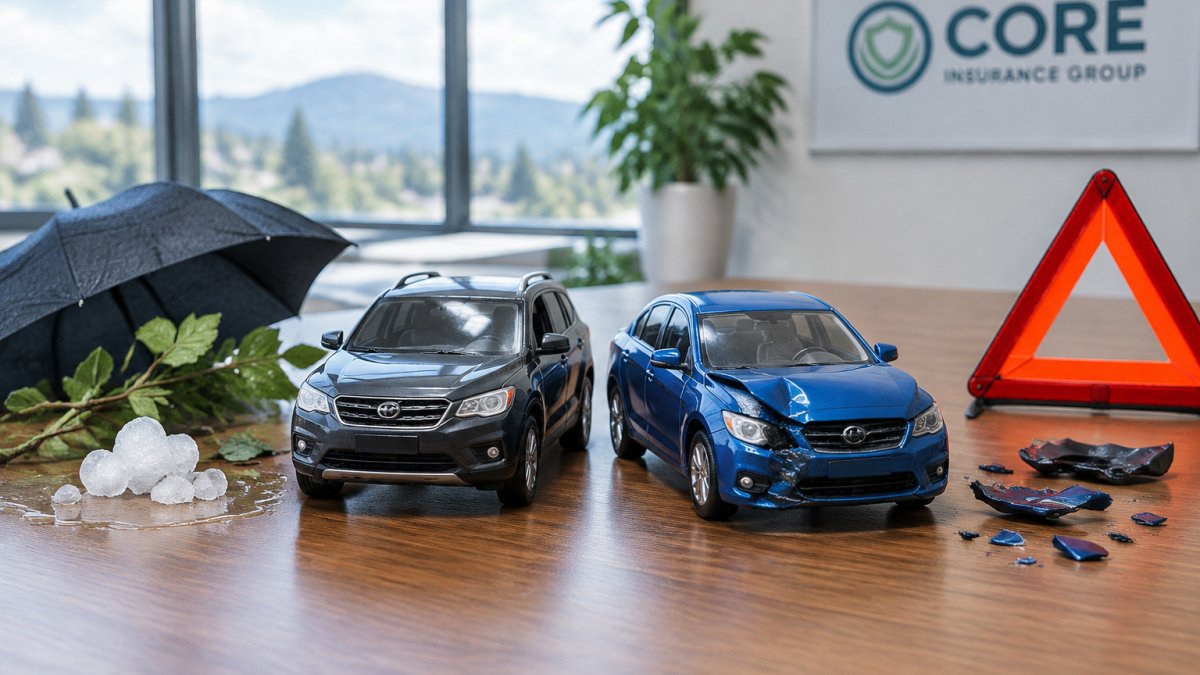
Comprehensive vs collision coverage differs by what causes the damage. Collision pays for crashes with another vehicle or an object, while comprehensive pays for non-crash losses like theft, vandalism, fire, hail, and animal strikes. Most drivers with a loan or lease need both.
- Collision covers damage from crashes with another car, a guardrail, a fence, or a pole.
- Comprehensive covers theft, vandalism, fire, flood, hail, falling trees, and deer strikes.
- Oregon requires liability insurance, but comprehensive and collision are not mandatory under state law.
- Lenders or leasing companies may require both coverages as a condition of financing.
- Comprehensive generally costs less than collision, and premiums depend on insurer, location, and vehicle value.
Table of Contents
- Comprehensive vs Collision Insurance: The Core Difference
- What Does Comprehensive Car Insurance Cover?
- What Does Collision Insurance Cover?
- Comprehensive and Collision Deductibles Compared
- Oregon Requirements: Is Either Coverage Mandatory?
- When to Drop Collision Coverage on an Older Car
- Choosing the Right Coverage for Your Oregon Car: Your Next Step
- Frequently Asked Questions
Comprehensive vs Collision Insurance: The Core Difference
If you carry car insurance in Oregon, you have probably seen two coverage types that sound alike, and the comprehensive vs collision decision is one of the first choices you will face. Both pay to repair or replace your vehicle, but they respond to different kinds of damage. Understanding this difference before you choose a policy can help you avoid an unexpected repair bill.
Collision coverage pays for damage from crashes with another vehicle or an object, such as a guardrail, a fence, or a pole. Comprehensive coverage pays for almost everything else: theft, vandalism, fire, falling objects, hail, and animal strikes. Oregon Division of Financial Regulation auto insurance FAQs explains how the regulator distinguishes these categories and gives examples of comprehensive claims, including fire, theft, and explosion.
Think of it this way: collision covers what you hit, and comprehensive covers what hits you or disappears. Most drivers with a loan or lease need both, while drivers with an older, paid-off car may choose only one.
What Does Comprehensive Car Insurance Cover?
Comprehensive car insurance covers damage to your vehicle from events that do not involve a collision. It is sometimes called "other than collision" coverage, and it applies regardless of who was at fault.
Typical covered losses include theft, vandalism, fire, flood, hail, windstorms, falling trees, and contact with animals such as deer. Glass damage from a rock on the highway is also commonly covered, though many policies waive the deductible for windshield repair.
Progressive comprehensive vs. collision guide notes that comprehensive coverage generally costs less than collision coverage, and that premiums also depend on your insurer, location, and vehicle value.
Common Claims Comprehensive Pays For in Oregon
Oregon drivers face a few recurring non-collision risks. Winter storms can bring falling limbs and hail. Wildlife crossings are common on rural highways around the Willamette Valley. Break-ins and catalytic converter theft also show up in urban parking areas. Each of these events falls under comprehensive, not collision, so a driver who carries only liability insurance has no protection for them.
What Does Collision Insurance Cover?
Collision insurance pays to repair your vehicle after a crash, no matter who caused it. If you hit another car, a fence, a mailbox, or a tree, collision coverage applies, subject to your deductible.
State Farm collision vs. comprehensive guide describes collision coverage as the protection for accidents involving other cars or objects. Collision claims also include rollovers and damage from potholes or curbs that cause a crash.
Collision coverage is useful when a driver is at fault and when the other driver is uninsured or underinsured. In those cases, your own collision policy can pay for repairs while you pursue recovery separately.
Comprehensive and Collision Deductibles Compared
A deductible is the amount you pay before insurance covers the rest of a claim. Comprehensive and collision coverage each carry their own deductible, and the two can be set at different amounts on the same policy.

Deductible amounts vary by insurer and policy, so check your declarations page for the figures that apply to you. A higher deductible lowers your premium but increases what you pay after a claim. A driver who picks a $1,000 collision deductible and a $250 comprehensive deductible has more risk on crashes than on theft or weather losses.
| Coverage | Common Deductible Range | Typical Claim Examples | Who Pays First |
|---|---|---|---|
| Comprehensive | $100 to $500 | Theft, hail, fire, deer strike, catalytic converter theft | You pay the deductible, then insurer pays the rest |
| Collision | $250 to $1,000 | Crash with another car, pole, guardrail, or pothole | You pay the deductible, then insurer pays the rest |
The Cost-Versus-Benefit Math Most Drivers Skip
The deductible decision depends on how likely you are to file a claim and how much you could absorb if you did. A practical way to frame it: compare the annual premium savings from raising your deductible against the extra out-of-pocket exposure you take on.
Watch out: raising a deductible to save premium only works if you actually have the cash set aside to cover the higher amount. A driver who picks a $1,000 deductible but could not pay it after a crash has effectively bought less protection, not more.
How Deductibles Interact With Rideshare Coverage
If you drive for a rideshare platform, your deductible picture gets more complicated. During the period when you are logged into the app but have not accepted a request, the platform's contingent coverage, where it applies, typically sits behind your personal policy and often carries a higher deductible than your own.
A rideshare endorsement on your personal policy may extend your own coverage into app-on periods. Ask your insurer how its terms and deductibles apply. That is one reason the endorsement is often worth pricing out before you decide to raise your deductible to save money, the two decisions interact.
Matching Deductibles to Your Vehicle and Driving Pattern
A few patterns tend to hold across most policies:
- Newer or financed vehicles: Keep deductibles lower, because the vehicle's replacement cost is high and a lender may impose its own maximum deductible requirement.
- Older, paid-off vehicles: A higher deductible can make sense if the premium savings are real and you could replace the car out of pocket.
- High-theft or severe-weather areas: A lower comprehensive deductible is often worth the premium, since comprehensive claims like catalytic converter theft and hail damage are more frequent than collision claims in many urban and storm-prone areas.
- Full-time rideshare drivers: Review any rideshare endorsement alongside your deductible choices, since the two can interact.
Check your declarations page for the exact figures on your policy, since rates and options vary by insurer and by coverage level. If you are weighing a deductible change, ask your insurer how it would affect both your premium and any rideshare endorsement you carry before you commit.
Oregon Requirements: Is Either Coverage Mandatory?
Oregon requires drivers to carry liability insurance, which pays for injury and property damage you cause to others. Comprehensive and collision coverage are not mandatory under state law.
Oregon Division of Financial Regulation auto insurance FAQs lists the state's minimum requirements and is the best place to confirm current rules. Because requirements can change, check the official source before you make a final decision.
If you are looking for ways to lower your premium while keeping the coverage you need, our guide 7 Ways to Save Money on Oregon Home and Auto Insurance covers practical options for Oregon households.
When to Drop Collision Coverage on an Older Car
Collision coverage on an older car can cost more than the car is worth. Some drivers consider dropping collision when its annual premium is a large share of the vehicle's actual cash value. But that rule of thumb is too blunt for most drivers, because it ignores how you use the car, whether a lender is involved, and whether you drive for a rideshare platform. A better approach is a decision framework built around vehicle value, driving frequency, and financing status.
Start With the Numbers, Not the Rule of Thumb
Before you drop collision, gather three figures: your vehicle's current actual cash value (what an insurer would pay if it were totaled today), the annual premium you pay specifically for collision coverage, and the largest repair bill you could comfortably pay out of pocket. If the collision premium is a large fraction of the vehicle's value and you have savings to absorb a total loss, dropping collision is a reasonable option. If a total loss would leave you unable to replace the car, keeping collision may still make sense even on an older vehicle.
Watch out: actual cash value is not the same as what you could sell the car for privately. Insurers pay based on market value adjusted for condition and mileage, and that figure can be lower than you expect, especially for high-mileage vehicles.
The Decision Changes by Driver Profile
The right answer depends heavily on who you are and how you use the car:
- Occasional drivers with a paid-off older car: If you drive infrequently, have savings set aside, and the car's value is modest, dropping collision is often the most cost-effective choice. Your exposure to a crash is lower, and the premium savings compound over time.
- Full-time rideshare drivers: Dropping collision is riskier than it looks. You spend more hours on the road, which raises your crash exposure, and a rideshare endorsement typically extends your collision coverage into app-on periods. Dropping collision may affect how a rideshare endorsement responds, so review the interaction before you cancel the coverage.
- Leased or financed vehicles: You generally cannot drop collision, because the lender or leasing company requires it as a condition of the agreement. Even if the state does not mandate it, the finance contract does.
- Drivers with a high-value or hard-to-replace car: Keep collision even if the car is paid off, because replacing it out of pocket would be difficult.
What Dropping Collision Does Not Change
Dropping collision does not affect your comprehensive coverage, your liability coverage, or any rideshare endorsement you carry. It also does not change Oregon's liability insurance requirement, which applies regardless of whether you carry collision.
For the penalties that apply if you drive without required coverage, read What Happens If You Get Caught Without Insurance in Oregon before making any change. And if you are looking for ways to lower your premium while keeping the coverage you need, our guide 7 Ways to Save Money on Oregon Home and Auto Insurance covers practical options for Oregon households.
Choosing the Right Coverage for Your Oregon Car: Your Next Step
Choosing between comprehensive and collision comes down to three questions: what the car is worth, what you can afford to repay out of pocket, and whether a lender requires either coverage. Start by pulling your current declarations page and comparing each coverage's cost against the vehicle's value.
Core Insurance Group can help you review coverage options so you understand what each choice protects. If you are ready to compare your options, you can compare auto insurance rates from local Eugene providers or evaluate coverage limits, deductibles, and claims satisfaction across quotes before you decide. Our team is available to walk through your policy and answer questions, so reach out for a quote today.
Frequently Asked Questions
What is the difference between comprehensive and collision insurance?
Collision insurance pays to repair or replace your vehicle after a crash with another vehicle or an object such as a guardrail or fence, regardless of who is at fault. Comprehensive insurance covers damage from non-collision events such as theft, vandalism, fire, falling objects, hail, flooding, and hitting an animal. Both coverages apply to your own car, and both are usually subject to a deductible. Comprehensive typically costs less than collision, so many drivers carry both for full protection of their vehicle.
Is comprehensive or collision coverage required in Oregon?
Oregon requires drivers to carry liability insurance, which covers injury and property damage you cause to others. Oregon does not require comprehensive or collision coverage by law. However, if you finance or lease your vehicle, your lender will almost always require both coverages to protect its interest in the car. Check your loan or lease agreement and confirm the required deductible limits before you choose a policy.
Does comprehensive insurance cover a cracked windshield?
Yes, comprehensive insurance generally covers windshield damage from causes such as rocks, debris, or vandalism. Many policies also offer a separate glass coverage option. Comprehensive deductibles can apply, so a small chip may cost less to repair out of pocket than to file a claim for. Review your policy's glass terms, since some insurers waive the deductible for windshield repairs.
Do I need both comprehensive and collision coverage?
You do not have to carry both, but each protects against different risks. Collision alone leaves you exposed to theft, weather, and vandalism losses. Comprehensive alone leaves you paying out of pocket for crash damage. Drivers with newer or financed vehicles usually keep both, while owners of older, paid-off cars with low market value often choose only one or drop both.

Want this checked against your own policy?
We compare 100+ carriers and tell you what actually changes.