
Does Home Insurance Cover Water Damage? What You Need to Know
Last Updated: November 1, 2026
Quick Summary
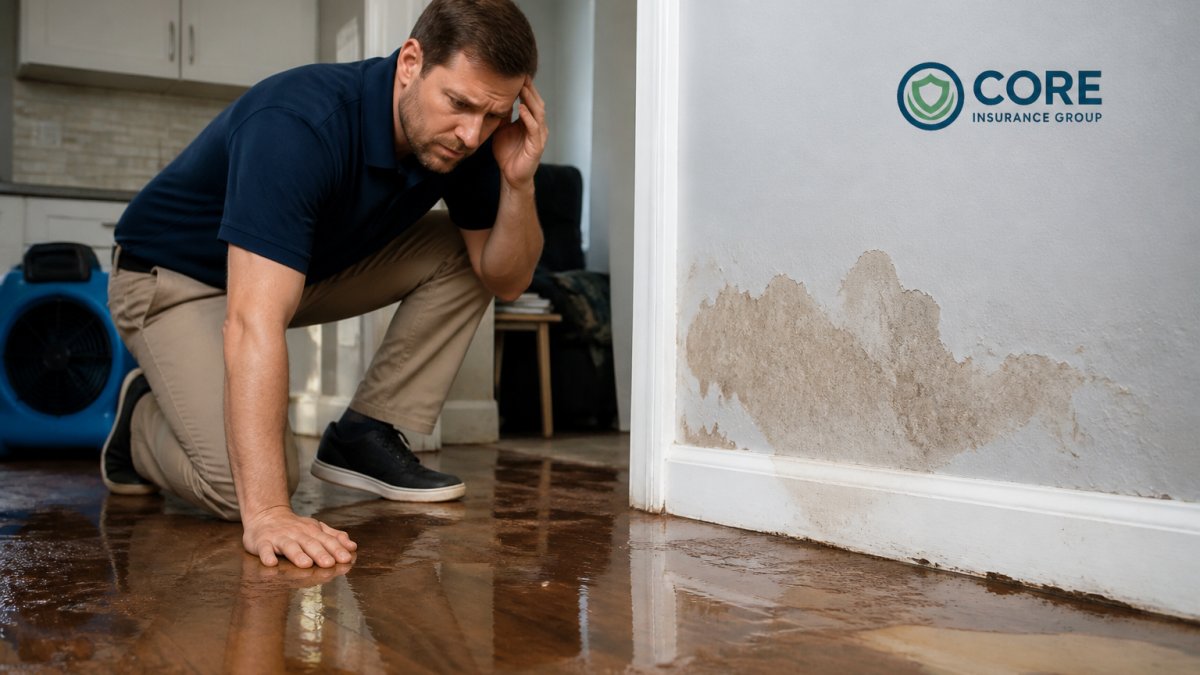
Home insurance covers water damage when it is sudden and accidental, such as a burst pipe or an appliance that fails without warning. Gradual damage from a slow leak that builds up over weeks or months is typically excluded as a maintenance issue.
- Sudden and accidental water damage is commonly covered; gradual seepage is usually excluded.
- Flood damage from rising water requires a separate flood policy, not a homeowners policy.
- Sewer backup is excluded unless you add an endorsement to your policy.
- Most policies include a duty to mitigate, so document the damage and dry the area within 24 hours.
- Keep the failed part, such as a burst hose, because the adjuster may want to inspect it.
Table of Contents
- Sudden and Accidental Damage: The Rule That Decides Most Water Damage Claims
- Common Causes of Covered Water Damage
- Does Home Insurance Cover a Leaking Pipe or Gradual Seepage?
- What Is Not Covered: Policy Exclusions and Maintenance Neglect
- Does Homeowners Insurance Cover Mold?
- How to File a Water Damage Insurance Claim
- Flood Insurance vs Homeowners Insurance: What Each One Covers
- Get a Quote and Review Your Water Damage Coverage
- Frequently Asked Questions
Sudden and Accidental Damage: The Rule That Decides Most Water Damage Claims
Most water damage claims come down to one question: was the damage sudden and accidental, or was it gradual? If your home insurance covers water damage, it almost always covers the sudden kind.
That single distinction decides more claims than any other clause in a homeowners policy.
Here is the short version:
- Covered: A supply line bursts and soaks your drywall.
- Usually not covered: A slow drip rots your subfloor over a year.
The difference is not the amount of water. It is the timeline.
Common Causes of Covered Water Damage
Water damage from a sudden event is commonly covered under a standard homeowners policy. The key is that the water came from inside your home, not from outside flooding.
Covered causes usually include:
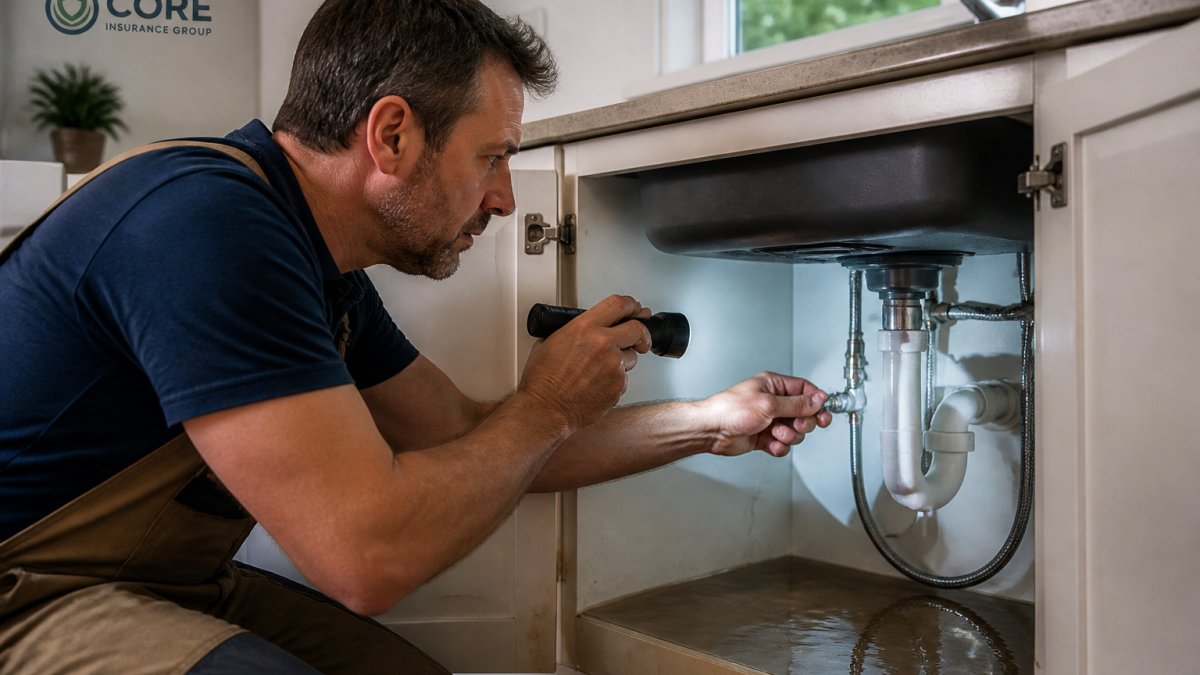
- A burst pipe or broken supply line
- Appliance failure, such as a washing machine hose that snaps
- An accidental overflow from a tub, sink, or toilet
- A plumbing failure inside the walls
- Storm-driven rain that enters through a damaged roof or window
The Insurance Information Institute's guide to homeowners insurance notes that water damage is among the most common home insurance claims. The cause matters more than the mess.
Does Home Insurance Cover a Leaking Pipe or Gradual Seepage?
Home insurance usually covers a leaking pipe only when the leak is sudden and accidental. Gradual seepage is a different story.
Here is the split:
- Sudden pipe burst: Typically covered, including the water damage it causes.
- Gradual seepage: Typically excluded, because the damage built up over time.
- The pipe itself: Often excluded, since wear and tear is a maintenance issue.
This is where most denials begin. Insurers call gradual seepage a maintenance problem, not an accident.
A common mistake is ignoring a small drip because it seems minor.
So what should you do? Fix small leaks fast and keep the receipt. It shows you acted to prevent water intrusion, which matters if a claim ever comes up.
What Is Not Covered: Policy Exclusions and Maintenance Neglect
Standard policies exclude several water events, and maintenance neglect sits at the top of the list. If a reasonable homeowner would have caught and fixed the problem, the insurer may deny the claim.
Common policy exclusions include:
- Gradual seepage and long-term leaks
- Maintenance neglect, like a known drip you never fixed
- Flood damage from rising water, which needs separate coverage
- Sewer backup, unless you add an endorsement
- Damage from poor construction or faulty repairs
The Oregon Division of Financial Regulation publishes consumer guidance on reading your policy and understanding what is excluded. It is worth a look before you file.
The endorsement check most guides skip
An endorsement (also called a rider) is an add-on that changes what your policy covers. The exclusions above are not always permanent, several can be bought back with the right endorsement. Before you assume you are uncovered, pull out your declarations page and check for these:
- Sewer backup endorsement. Covers water that backs up through drains or sumps. Standard policies exclude it.
- Water backup and sump overflow. A close cousin of sewer backup, often sold separately. Check whether your policy has one, both, or neither.
- Mold endorsement. Raises the mold cleanup limit above the standard cap. Worth checking if you live in a humid area or have had a prior water claim.
- Equipment breakdown endorsement. Can cover the cost of the failed appliance or system itself, not just the water damage it caused.
- Service line endorsement. Covers the water line running from the street to your home, which is typically the homeowner's responsibility and excluded from standard dwelling coverage.
A practical way to run the check: read your declarations page line by line, then match each endorsement against the exclusion list above. If an exclusion worries you and no endorsement addresses it, ask your agent what it would take to add one.
For a deeper walkthrough, our guide on understanding home insurance policy exclusions breaks down how these clauses work. And since maintenance neglect is the most common trap, our 7 steps to prepare your home for winter in Oregon covers the seasonal checks that prevent water damage before it starts.
Does Homeowners Insurance Cover Mold?
Homeowners insurance sometimes covers mold, but only when the mold traces back to a covered event.
The rule is cause, not condition.
Most policies also cap mold cleanup with a policy limit below your main dwelling coverage. Some insurers offer a mold endorsement to raise it.
Mold is often the second wave of a water claim, so drying a wet area quickly matters.
How to File a Water Damage Insurance Claim
Filing a water damage insurance claim follows a clear sequence, and the steps you take in the first 24 hours matter most. Most policies include a duty to mitigate, which means you must take reasonable steps to limit further damage.
The first 24 hours: stop, document, dry
- Stop the water. Shut off the supply valve or the main shutoff, and call a plumber if you cannot find it. Note the time you shut it off.
- Document before you touch anything. Photograph and video the damage from multiple angles, including wide shots that show the room and close-ups that show the water line, the failed part, and any staining. Include a photo of a tape measure or a common object for scale.
- Mitigate. Dry the area, move furniture off wet flooring, and run fans or a dehumidifier. Keep the receipts for any water extraction or emergency repairs, those costs are often reimbursable under the mitigation duty.
- Call your insurer. Report the claim and get a claim number. Ask whether the adjuster wants photos submitted before cleanup continues.
- Keep records. Save receipts, contractor invoices, and a written log of every call, name, and date.
- Meet the adjuster. Walk through the damage and provide your proof of loss, the itemized statement of what was damaged and what it will cost to repair.
- Follow up in writing. Confirm what was agreed and what comes next in an email so there is a paper trail.
The duty-to-mitigate checklist
Most guides mention mitigation in one sentence and move on. Here is what documentation actually looks like when an adjuster reviews it:
- Timestamped photos of the water before and after you shut it off.
- A written timeline, when you noticed it, when you shut off the water, when you called a plumber, when you called the insurer.
- Receipts for fans, dehumidifiers, extraction services, and any emergency repairs.
- The failed part itself, keep the burst hose or cracked fitting. Do not throw it away; the adjuster may want to inspect it.
- A moisture reading if a contractor takes one, showing the area was dried to a normal level.
Keep the evidence.
What to expect on the timeline
Ask your adjuster for the expected timeline in writing at the first contact, and follow up if you have not heard back within the window they gave you.
A common mistake is throwing out damaged items before documenting them. Keep them until the insurance adjuster has seen them.
Before you file, it helps to know the common reasons for denied home insurance claims, so you can avoid the mistakes that sink a valid claim.
Flood Insurance vs Homeowners Insurance: What Each One Covers
Flood insurance and homeowners insurance cover different things. A standard homeowners policy does not cover flooding (Buy a Flood Insurance Policy). You need a separate flood policy for rising water.
| Feature | Homeowners Insurance | Flood Insurance |
|---|---|---|
| Burst pipe | Covered | Not covered |
| Appliance failure | Covered | Not covered |
| Rising flood water | Not covered | Covered |
| Sewer backup | Endorsement needed | Varies by policy |
| Storm-driven rain through roof | Often covered | Not covered |
The practical takeaway: if water comes from the sky and pools on the ground, you need flood coverage. If it comes from a pipe inside your home, your homeowners policy usually responds.
Many homeowners learn this distinction only after a storm. Do not be one of them.
Get a Quote and Review Your Water Damage Coverage
The best time to review your water damage coverage is before you need it. Check your deductible, your dwelling coverage, your personal property coverage, and whether you have a sewer backup endorsement.
Then ask the questions that matter:
- Does my policy cover sudden appliance failure?
- Is there a separate mold limit?
- Do I need flood insurance where I live?
Core Insurance Group has 30+ years of industry experience, and we aim to explain what is covered and what is not in plain language.
You can get fast home insurance quotes online to compare your current coverage. And if premiums are on your mind, our guide on how to lower homeowners insurance premiums shows practical ways to cut costs without cutting protection.
Frequently Asked Questions
What should I do first after discovering water damage in my home?
Stop the source if you can safely do so, then document everything with photos and video before moving anything. Call your insurer or agent to report the loss promptly. Dry out what you can and keep receipts for any emergency repairs or equipment rentals. Your policy includes a duty to mitigate, meaning you must take reasonable steps to prevent further damage. Save damaged items for the adjuster to inspect rather than throwing them away.
Does home insurance cover a leaking pipe behind a wall?
It depends on whether the leak was sudden or gradual. A burst supply line that releases water all at once is typically covered, including water extraction and structural drying. A slow leak that has been seeping for months is usually treated as maintenance neglect and denied. The pipe itself often has limited or no coverage, but the resulting water damage to floors, drywall and personal property is what the claim pays for.
Will filing a water damage claim raise my premium?
It can. Insurers weigh claim frequency and severity when setting rates, and a large paid claim may affect your premium at renewal. A small claim near your deductible is often better paid out of pocket. Ask your agent to run the numbers before you file so you understand the tradeoff between the payout and the potential premium increase.
Does homeowners insurance cover mold after a covered water loss?
Mold remediation is usually covered when it results from a covered peril, such as a burst pipe, and you acted quickly to dry the area. Most policies cap mold remediation at a sublimit, often well below your dwelling coverage limit. Mold that stems from long-term seepage, humidity or neglected maintenance is generally excluded. Check your policy's mold sublimit before you need it.
Water damage rarely announces itself. It starts as a drip, a stain, or a hose that is one season past its prime. The homeowners who avoid the worst claims are the ones who review their coverage before the water hits the floor. Core Insurance Group can help you check your policy, close the gaps, and understand exactly what your water damage coverage does and does not include. Get started with Core Insurance Group and protect your home with coverage you actually understand.

Want this checked against your own policy?
We compare 100+ carriers and tell you what actually changes.