
Rideshare Insurance in Oregon: Is the Coverage Worth It?
Quick Summary
Rideshare insurance is usually worth it for Oregon drivers who accept paying passengers, because a personal auto policy is written for personal use and may not pay during a trip. Whether the added premium is worth it depends on your collision deductible, your liability exposure, and how much your vehicle is worth.
- A personal auto policy may treat paid rides as business use and pay less or deny a claim.
- Coverage usually changes by trip stage, from logged on and waiting to passenger drop-off.
- Compare the annual endorsement premium against the uncovered loss it would remove, not the premium alone.
- Ask your agent how your personal policy responds during each period of a trip before your next shift.
- Confirm current Oregon minimums and platform coverage terms, since they can change.
Table of Contents
- Why Rideshare Driving Changes Your Insurance Picture
- What Rideshare Insurance Covers at Each Stage of a Trip
- The Personal Auto Insurance Rideshare Coverage Gap
- Oregon Rideshare Insurance Requirements You Need to Know
- What Rideshare Insurance Costs in Oregon and How to Weigh It
- A Decision Framework by Driving Frequency and Vehicle Value
- Getting a Rideshare Quote Before You Drive Another Trip
- Frequently Asked Questions
Why Rideshare Driving Changes Your Insurance Picture
Rideshare driving puts a second layer of risk on top of your everyday auto insurance. Many Oregon drivers assume their personal policy will protect them while they carry paying passengers. In many cases it will not. The answer depends on what you are doing behind the wheel at the moment something goes wrong.
Here is the short answer: a personal auto policy is written for personal use. Once you accept a fare, your insurer may treat the car as a business vehicle, and that can change what gets paid. Rideshare coverage, whether sold as an endorsement or provided by the platform, is intended to fill those gaps.
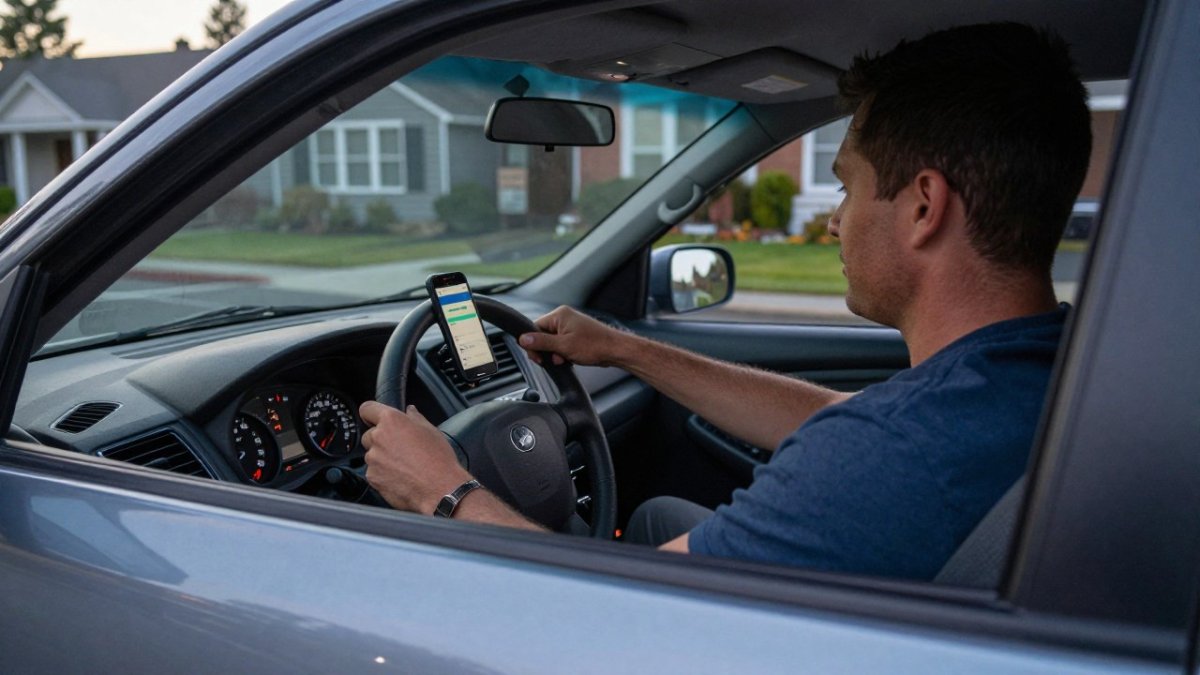
!Rideshare driver seated in a parked sedan at dusk on a residential street, phone mounted on the dashboard showing a trip request
Oregon drivers face the same underlying issue as drivers everywhere, but the details of your policy matter. Our guide on local Eugene auto insurance pricing shows how rates are set for drivers in your area. Read your declarations page, ask your agent how a personal policy responds during rideshare use, and do not assume silence means coverage.
What Rideshare Insurance Covers at Each Stage of a Trip
Rideshare insurance is coverage that protects you during the periods when you are driving for a platform. Coverage levels are usually tied to what the app is doing at that moment. Knowing the stages helps you see where your personal policy stops and platform coverage starts.
Period One: Logged On and Waiting for a Request
When your app is on and you are waiting for a ride request, you are generally in the first period. Coverage here is typically limited compared with later stages. Your personal policy may still apply, but the platform may provide only limited contingent protection.
Periods Two and Three: Ride Accepted Through Passenger Drop-Off
Once you accept a request and travel toward a passenger, and then carry that passenger, coverage usually expands. These are the periods most drivers worry about. Verify with the platform and your insurer exactly what applies, because coverage terms differ by company and policy.
The Personal Auto Insurance Rideshare Coverage Gap
The coverage gap is the space between what your personal policy pays and what a platform provides. Many personal policies exclude commercial use, which can include carrying paying passengers. Our guide to commercial liability policy exclusions explains how these exclusions work and which endorsements address them. If an accident happens during a trip, your insurer may deny the claim or pay less than expected. Our article on what happens if you drive uninsured in Oregon explains the legal consequences of that gap.
Think of it this way: your personal policy is built for commuting and errands, while rideshare driving is closer to running a small transportation business. Closing the gap usually means adding a rideshare endorsement to your personal policy or confirming that your insurer will cover the activity.
Oregon Rideshare Insurance Requirements You Need to Know
Oregon sets minimum auto liability requirements for every driver, and those minimums apply whether or not you drive for a rideshare platform. For background on why auto coverage costs what it does in the state, see our overview of the Oregon market. Confirm the current state minimums with the Oregon Department of Consumer and Business Services or your insurer before relying on any specific figure.
Platforms layer their own coverage standards on top of state minimums, and those standards change by trip period. Coverage terms differ by platform and can change, so review each platform's current coverage summary to see which layer responds during each stage of a trip. Your personal policy's terms, including whether it excludes commercial use, determine how much of any gap remains.
Platforms generally require you to report any incident through the app as well. Keep your declarations page, your platform coverage summary, and your trip records together so you can show which layer should respond.
Watch out: platform coverage terms and state requirements can change. Confirm the current limits with each platform you drive for and with the appropriate Oregon agency before you rely on them.
What Rideshare Insurance Costs in Oregon and How to Weigh It
The cost of a rideshare endorsement varies with your driving record, vehicle, coverage limits, deductibles, and where you park the car overnight. Pricing depends on these individual factors, so ask your agent for a quote. The only number that matters is the one on your declarations page after an endorsement is added.
To judge whether the endorsement is worth it, run a simple cost-versus-benefit comparison rather than comparing premiums in isolation. The endorsement is worth it when the annual added premium is smaller than the expected uncovered loss it removes. Three numbers drive that comparison:
- Your annual added premium. Ask your agent for the endorsement quote as a dollar figure and as a percentage of your current premium.
- Your collision deductible. If you carry a $1,000 deductible, that is the amount you would pay out of pocket on a covered physical damage claim before the platform's contingent collision coverage responds, and if you dropped collision entirely, the full repair or replacement cost falls on you.
- Your at-fault liability exposure. State minimum liability limits are often low relative to the cost of a serious crash. If your personal limits sit at the minimum and your platform's Period One contingent coverage is limited, a single at-fault crash while waiting for a request can exceed both layers.
The trade-off is easiest to see by comparing the cost of the endorsement with the cost of an uncovered claim. If dropping the endorsement would leave you without coverage during a paid trip, a single repair bill after your deductible can outweigh the premium. That is the calculation, not the sticker price of the endorsement alone.
The math flips for some drivers. If you drive only a handful of trips a month, carry high liability limits already, and drive an older vehicle with low replacement value, the endorsement may cost more than the exposure it removes, and platform contingent coverage plus your existing policy may be enough. The point is to run the numbers for your profile rather than assume the endorsement is always right or always unnecessary.
Watch out: skipping the endorsement to save a small annual amount can leave you paying the full cost of damage or injuries out of pocket during a period when neither your personal policy nor the platform will respond, the savings are real, but so is the exposure.
A Decision Framework by Driving Frequency and Vehicle Value
The right choice depends mostly on two factors: how often you drive for a platform, and how much your vehicle is worth.
- Occasional driver, older vehicle: Limited trips and lower vehicle value may make platform coverage plus a modest endorsement a reasonable balance. Confirm your exposure with an agent.
- Regular driver, newer vehicle: Frequent trips and higher vehicle value usually justify a full rideshare endorsement, because the potential loss is larger.
- Full-time driver: Heavy mileage raises your overall risk. Review your liability limits and collision coverage carefully, and consider whether a more complete commercial policy fits better.
Your situation may fall outside these examples. A short conversation with an advisor can help you place yourself in the right category.
Getting a Rideshare Quote Before You Drive Another Trip
The simplest next step is to get a quote before your next shift. Our Eugene guide to comparing auto insurance rates explains what to ask local agents. Tell your agent that you drive for a rideshare platform, the platforms you use, how often you drive, and the vehicle you use. Ask how your personal policy responds during each period of a trip, and request a rideshare endorsement quote alongside your current coverage.
At Core Insurance Group, we explain your options in plain language and help you compare coverage so you understand what is protected before a claim ever happens. Our clients in Eugene and across Oregon value straightforward advice, and our team can walk you through the details.
Get a rideshare coverage review with Core Insurance Group and know exactly what protects you on the road.
Frequently Asked Questions
Is insurance more expensive if you do rideshare?
Usually, yes. Adding rideshare coverage to a personal auto policy raises the premium, and the increase varies based on your driving record, vehicle, coverage limits, and how often you drive for an app. The price increase depends on individual factors, so the only reliable number is the one your insurer quotes you. Ask for the cost with and without the endorsement so you can see the exact difference before deciding.
Does personal auto insurance cover rideshare driving?
Often not fully. Many personal auto policies exclude or limit coverage while a vehicle is used to transport paying passengers. Coverage depends on app status: a driver logged on and waiting for a request, a driver who has accepted a ride, and a driver with a passenger in the vehicle may each be covered differently by the platform and the personal policy. Check your policy language or ask your agent to confirm exactly what applies to each period.
Is rideshare insurance required for Oregon drivers?
Rideshare drivers must carry insurance that meets state requirements, and platform coverage applies during certain trip stages. Requirements can change, so confirm current Oregon rules with the Oregon Department of Consumer and Business Services and with your insurer before you start driving. Your agent can also verify whether your current policy satisfies the requirement.
How can I compare rideshare insurance options?
Start by asking your current insurer for a rideshare endorsement quote, then request quotes from other carriers that offer rideshare coverage in Oregon. Compare the premium increase, liability limits, collision and comprehensive deductibles, and what each option covers in each app period. Use the same coverage limits for every quote so the comparison is fair. Core Insurance Group can walk you through these options and provide a quote for your situation.

Want this checked against your own policy?
We compare 100+ carriers and tell you what actually changes.